
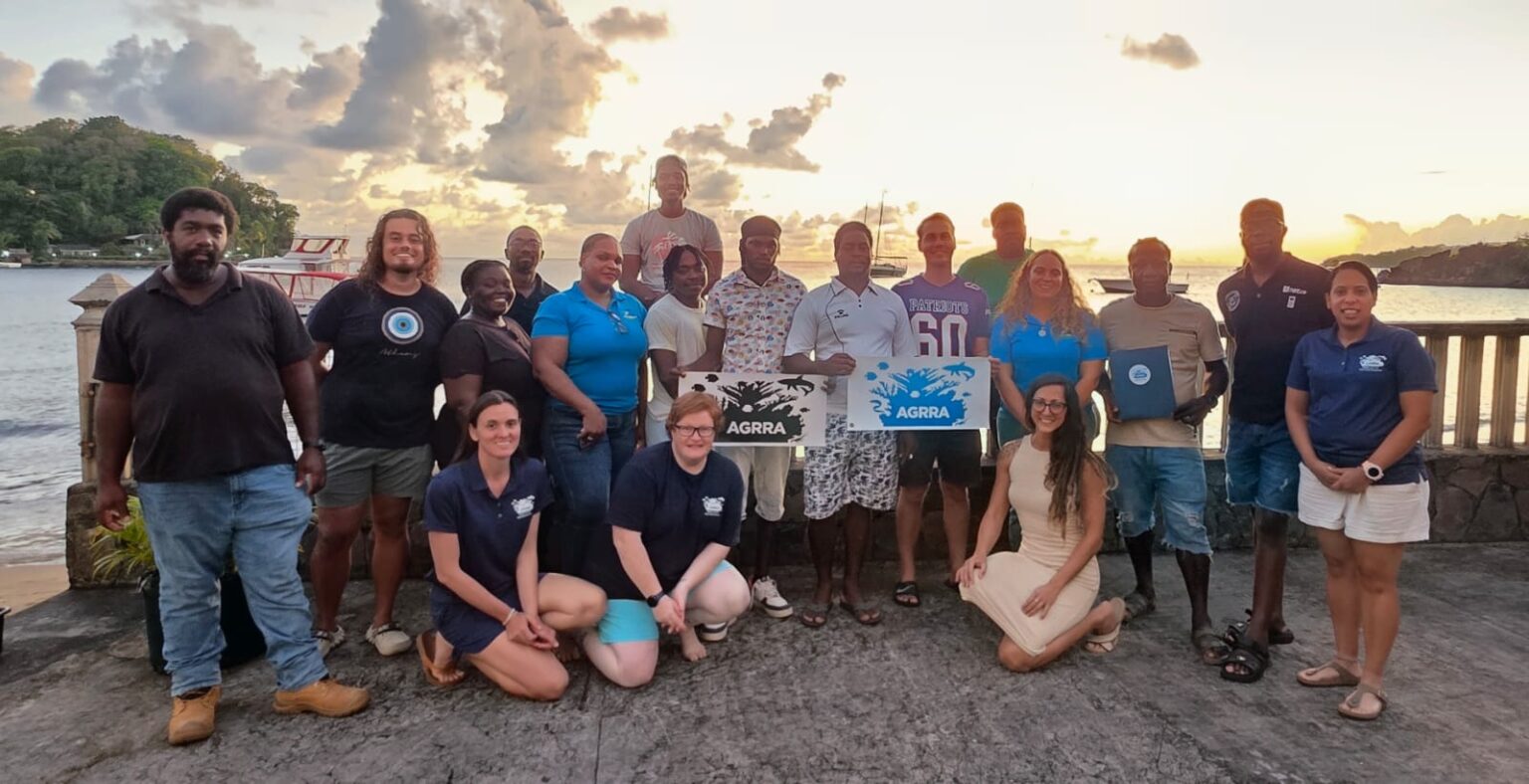
Participants of the AGRRA training in Saint Vincent (Photo by Claudia Guerrero)
For five days in October, a classroom in Villa became a launchpad for the reef. From 19 to 23 October 2026, eighteen participants gathered at Paradise Beach Hotel in Villa, St. Vincent, for Atlantic and Gulf Rapid Reef Assessment (AGRRA) training. Eight of them are coral gardeners working with CLEAR Caribbean, We Are Mayreau (WAM) and Richmond Vale Academy (RVA) on the TREBAI project. They swapped lecture notes for underwater datasheets, learning to survey the coral reefs of Saint Vincent and the Grenadines with the same methods used across the wider Caribbean. The training was spearheaded by the Ministry of Fisheries, Marine and Land Conservation and Climate Resilience and funded through its Ridge to Reef project. That project is implemented by the United Nations Development Programme (UNDP) with funding from the Global Environment Facility (GEF).
CLEAR Caribbean Ltd worked alongside the Ministry supporting the in-water training and dive operations through funding from the Caribbean Biodiversity Fund, supported by Germany’s Federal Ministry for the Environment, Climate Action, Nature Conservation and Nuclear Safety (BMUKN) through the International Climate Initiative (IKI) and KfW.
From theory to the reef
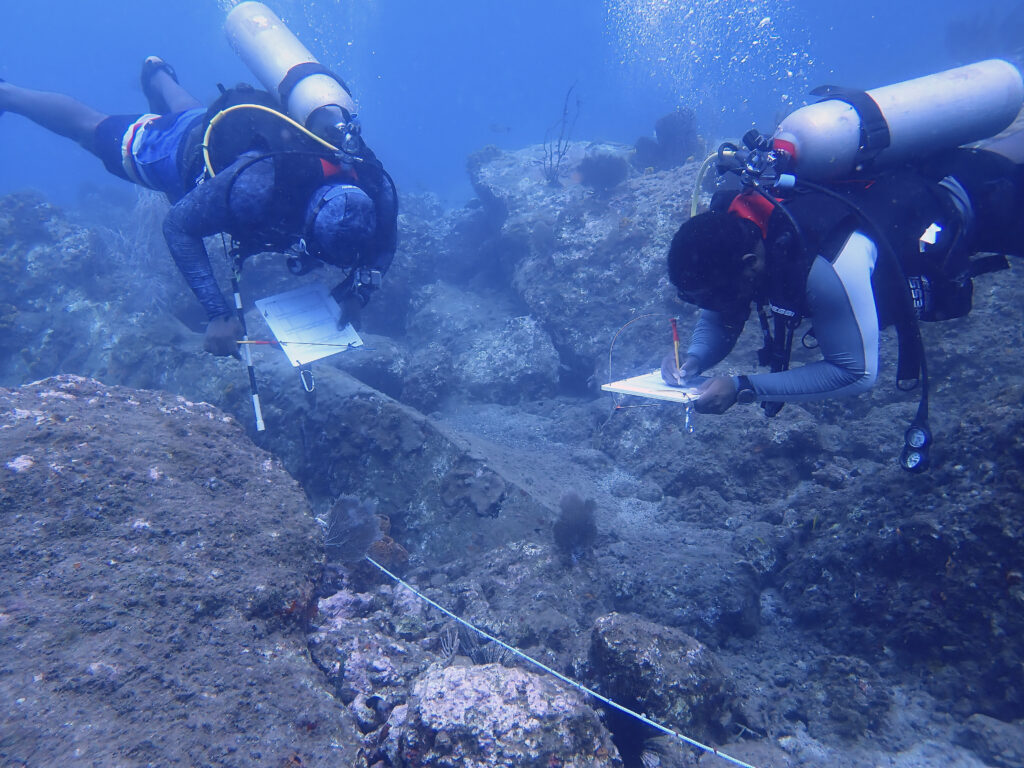
Facilitators Giselle Brady, Michelle Taylor and Claudia Guerrero, from AGRRA and the Ocean Research and Education Foundation, ran full days from 9 am to 5 pm. Classroom sessions on the Benthos and Fish protocols were followed by supervised dives. There, participants practised identifying corals, algae, invertebrates and key reef fish. They also recorded signs of coral bleaching and disease, then entered and checked their results in the regional AGRRA database.
The group was a broad mix, with staff from the Ministry, We Are Mayreau’s Reef Life team, CLEAR Caribbean, Richmond Vale Academy, the National Parks, Rivers and Beaches Authority, Tobago Cays Marine Park, Serenity Dive and Environmental Protection in the Caribbean (EPIC). Everyone who completed all components earned a Professional Development Certification as an AGRRA Coral Reef Monitoring Surveyor. Others received partial certification for the theory or practical parts they finished. All graduates joined the AGRRA Caribbean Network, which has trained more than 2,000 people across 25 countries.
Why consistent data counts
Caribbean reefs are under pressure. The Global Coral Reef Monitoring Network’s 2025 report found that regional hard coral cover fell by 48% between 1980 and 2024, and disease, heat stress and overfishing continue to take a toll. Because AGRRA is used regionally, surveys carried out in Saint Vincent and the Grenadines can be compared directly with reefs elsewhere. Repeated over the years, they will show where reefs are declining, where they are recovering, and whether protection and restoration efforts are working.
The graduates will now form a national AGRRA monitoring team and carry out reef assessments across the country, with ongoing guidance from the wider AGRRA team.
